Mission / Vision
École de Bellegarde serves Fransaskois families in the communities of Bellegarde, Storthoaks, Gainsborough, Carievale, Maryfield, Redvers, Alida, and Wauchope who are seeking a school that provides a high-quality French first-language education for their children. Instruction is guided by proven educational practices used in schools across Canada. The school fosters the development of students’ francophone identity through enriched programming and through the engagement of parents, families, and the broader Fransaskois community in supporting student success.
Mission
École de Bellegarde strives to ensure that its students become engaged, independent, and bilingual francophone citizens who are prepared to contribute fully to the society of today and tomorrow.

Vision
At École de Bellegarde, we believe in the potential of every student. Guided by high expectations and research-based practices, we foster the success of each learner in an environment rooted in respect and recognition.
Values
- Success
We believe in every student’s ability to succeed and implement effective practices to support their learning journey. - Respect
We foster a caring and inclusive environment where everyone is welcomed, heard, and valued. - Recognition
We recognize the efforts, progress, and achievements of both students and staff, valuing the journey as much as the results.
Welcome to École de Bellegarde!
Welcome to École de Bellegarde, a French-language school where every student is known, supported, and encouraged to reach their full potential. From Pre-Kindergarten to Grade 12, we provide a dynamic and caring learning environment that promotes academic success, personal growth, and the development of a strong francophone identity.
At École de Bellegarde, we believe that success takes many forms. That is why we are committed to offering rich and meaningful learning experiences tailored to the needs, strengths, and aspirations of each student. Guided by high expectations and proven educational practices, we help our learners develop the knowledge, skills, and confidence they need to thrive.
Our school is also a reflection of a close-knit community where respect, collaboration, and recognition are at the heart of everything we do. The partnership among students, families, staff, and community members helps create a welcoming environment where everyone feels valued and has a sense of belonging.
Together, we are preparing engaged, independent, bilingual francophone citizens who are proud of their language and culture and ready to make a positive contribution to the society of today and tomorrow.
Succeeding together, through respect and recognition.
Virginie Tomppé
Our Team
At École de Bellegarde, our team is committed to creating a welcoming, engaging, and nurturing learning environment where every student can thrive.
Meet the dedicated staff members who support our students throughout their academic, personal, and Francophone journey, helping them grow, succeed, and reach their full potential year after year.

Meet the staff at École de Bellegarde
A Look Back at Our History
The history of École de Bellegarde began in 1903 with the arrival of Mr. Jobin, the first teacher to settle in Bellegarde. At that time, classes were held in the rectory, and French was the sole language of instruction.
In 1905, the Parish of Saint Maurice warmly welcomed two Sisters of the Cross, Sister Salvinie Eugénie and Sister Thaisse Marie. Mr. Honoré George immediately undertook the construction of a small convent, which was completed in the fall of the same year. The first boarding student, Émilia Renard, was welcomed there. The sisters taught French and religion, while Miss A. Boileau provided instruction in English.
In 1912, Reverend Sister Thérèse Eugénie became the director of the convent. Under her leadership, a larger convent was built a few years later. With the arrival of male boarding students, the rectory chapel was converted into a dormitory under the supervision of Msgr. Napoléon Poirier.
The construction of a new convent was encouraged in 1917, and the project was completed in 1919. The sisters continued teaching there until 1961.
In 1953, a new three-classroom school was built, consisting of one classroom in the basement and two on the main floor. The gradual closure of rural schools led to increased enrolment, resulting in the addition of six new classrooms in 1961.
In 1964, the school became bilingual and served 267 students. The introduction of school buses made boarding accommodations unnecessary. The addition of an eighth classroom also eliminated the need to use the convent facilities. The four-storey building, which required significant repairs, was vacated by the sisters in 1974, when they moved into a more modest residence.
In 1983, École de Bellegarde had an enrolment of 79 students. The staff consisted of three sisters, three teachers, and one teacher assistant.
In 1994, the Bellegarde community learned with great sadness that the old brick convent, an iconic landmark that had served the field of education for more than 75 years, had been declared unsafe and uninhabitable. It was subsequently demolished.
That same year, the first elections for the Bellegarde Francophone School Board (CSF) were held. The first elected trustees were Mariette Wolensky, Richard Wolensky, Marc George, Joseph Poirier, and Claudia Poirier.
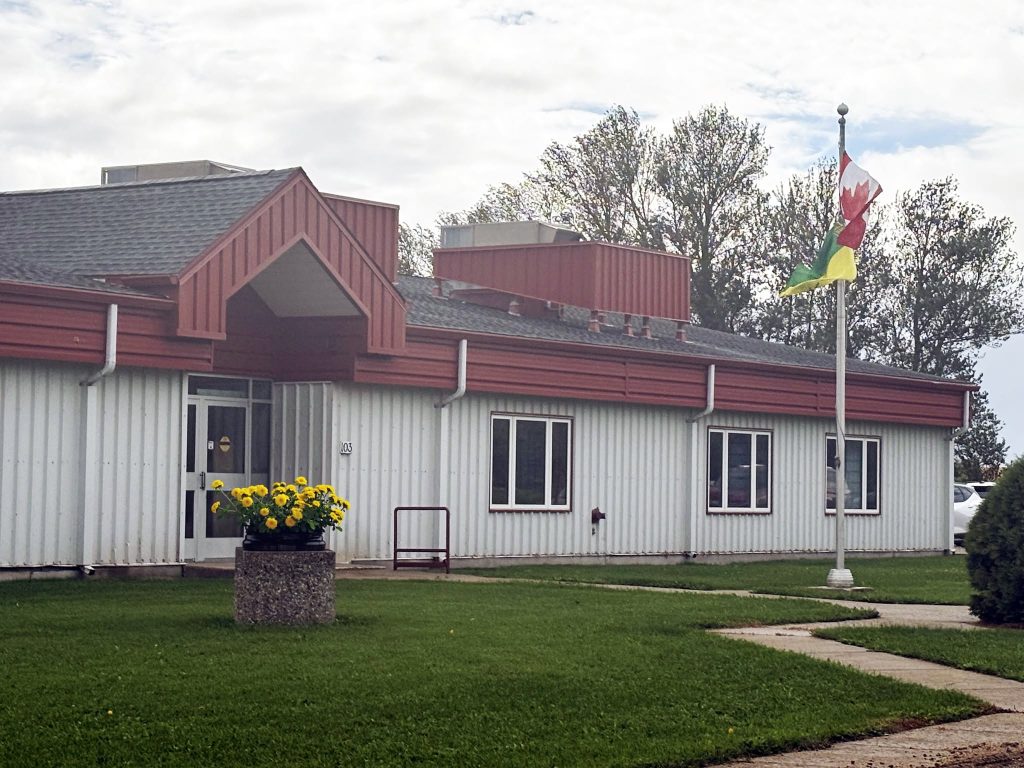
On January 1, 1995, École de Bellegarde joined the Fransaskois component of the Francophone School Division No. 310, now known as the Conseil des écoles fransaskoises (CÉF). Construction of a new school began at the end of January 1995 and was completed in time for the start of the school year in August.
The official opening of the new École de Bellegarde took place on November 10, 1995.
Governance
and policy
The Conseil scolaire fransaskois (Fransaskois School Board, or CSF) is made up of ten trustees elected from the province’s Francophone school regions. Each trustee represents a designated region of Saskatchewan and serves a three-year term.
The CSF provides governance and strategic direction for the Conseil des écoles fransaskoises (CÉF), ensuring that Francophone students across Saskatchewan receive a high-quality education in French. Much like the Boards of Education that oversee English-language school divisions, the CSF is responsible for setting priorities, making key decisions, and supporting the long-term success of the school division.
Your school board trustee
Other members of CSF Board
Election to the Conseil scolaire fransaskois (School Board)
Interested in becoming a member of the Fransaskois School Board (CSF)? Consult the document below to learn about your rights, eligibility, and the election process:
- Election Regulations for the Conseil scolaire fransaskois.
For any additional questions pertaining to nominations, election timelines, voting information, or election results, please contact the Conseil des écoles fransaskoises (CÉF) Head Office at 1.877.273.6661.
Code of Ethics and Code of Conduct for School Board Members
The members of the Board and the Board as a whole are committed to maintaining the highest standards of ethical and professional conduct. Trustees are expected to act with integrity and in accordance with the Code of Ethics established by the Saskatchewan School Boards Association.
For more information, please refer to Policy 2.3: Code of Conduct in the Fransaskois School Board Policy Manual (Politique 2.3 sur le Code de conduite) in the Fransaskois School Board Manual (Manuel des politiques du Conseil scolaire fransaskois).
Conseil d’école (School Community Council)
Role and Responsibilities of the Conseil d’école
Each Fransaskois school elects a Conseil d’école (School Community Council) made up of a minimum of four and a maximum of nine members, depending on the school region. One of the elected members serves as the community representative and must be an adult member of the Francophone minority community residing within the school’s attendance area. The remaining members are parents or guardians of students enrolled at the school. All council members are elected by the school’s parent community.
The Conseil d’école represents parents and guardians by providing input and recommendations to the Conseil scolaire fransaskois (Fransaskois School Board, or CSF) and the Conseil des écoles fransaskoises (CÉF). Council members contribute to discussions, planning initiatives, and school development activities that support student success and the continued growth of French-language education.
Each council member is elected to a two-year term.
If you are interested in running in the next election, please contact the school principal for more information.
Meeting minutes are available upon request.